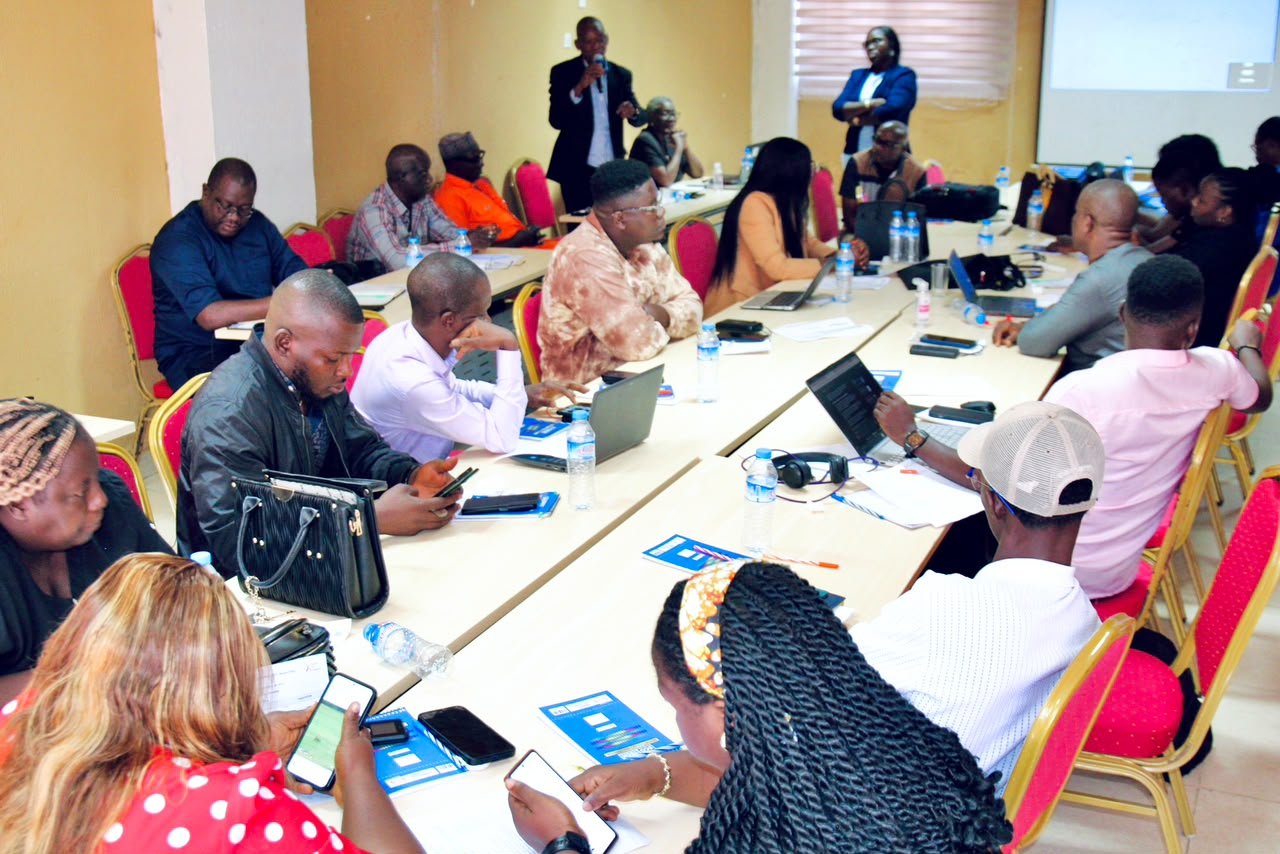
MONROVIA: The National AIDS Commission (NAC) on Tuesday September 29, 2026, trained media practitioners on responsible human immunodeficiency virus (HIV) Reporting.
The training, was intended to strengthen the media’s role in the national HIV response by promoting accurate reporting, combating misinformation, shaping public perceptions, and influencing policy. Participants came from several media institutions in the country.
During the gathering, journalists were briefed on the importance of reporting evidence-based information that encourages communities to seek HIV testing, treatment, and support without fear of stigma or discrimination.
In her opening remarks, the National AIDS Commission Chairperson, Dr. Cecelia Nuta, called on journalists to promote accurate, sensitive, and ethical reporting on HIV to help reduce stigma and discrimination against people living with the virus.
Dr. Nuta emphasized that journalists have a unique power to inform the public, shape perceptions, and influence policy, noting that the way HIV-related stories are reported can either challenge stigma and misinformation or reinforce fear and discrimination.
She also stressed the importance of stories that promotes evidence-based information and encourages communities to seek HIV testing, treatment, and support without fear of discrimination.
According to Dr. Nuta, responsible media reporting can contribute to reducing stigma, advancing human rights, and strengthening efforts to combat HIV in Liberia.
The NAC Boss also said, the training is essential for journalists and media practitioners to ensure accurate and ethical coverage of the HIV epidemic.
The initiative is part of efforts to strengthen their understanding of the national HIV response and improve the quality of information reaching the public.
“Journalists hold a unique power to inform, to shape public perception, and to influence policy in the context of HIV, this power carries even greater responsibility.” Nuta said.
She warned that the way journalists frame and report HIV stories can either help eliminate stigma and misinformation or reinforce harmful perceptions about people living with HIV.
“The way stories are told can either break down stigma and discrimination, or reinforce them. They can empower communities, or deepen fear and misunderstanding,” she said.
The training sought to equip journalists with the knowledge and practical tools needed to produce accurate, balanced, ethical and data-driven stories on HIV, while helping them better understand relevant statistics, terminology and Liberia’s national response.
The commission’s training framework recognizes the media as an influential partner in shaping public understanding of HIV through news reports, talk shows, interviews, feature stories and social media.
Among other objectives, the exercise was designed to improve journalists’ understanding of Liberia’s national HIV response and strategic priorities, the Spectrum modeling process and key HIV indicators, as well as their ability to accurately interpret and communicate HIV statistics.
“We recognize the challenges you face in balancing deadlines, editorial pressures, and the need for compelling stories,” she said. “That is why this training is not about technical knowledge, but is also about practical tools and strategies to help you report responsibly while still engaging your audiences.”
The commission expects the training to contribute to more accurate HIV-related media content, reduce misinformation and stigmatizing narratives and strengthen collaboration between NAC and media institutions.
“Let us work together to ensure that every headline, every broadcast, and every article contribute to reducing stigma, advancing human rights, and strengthening the fight against HIV,” Nuta said.
Giving the overview of the training, Madam Gifty Clarke, head of Communication at the NAC first lauded the media practitioners for gracing the occasion and noted that, the media remains one of the most influential partners in shaping public understanding of a wide range of societal issues, including the fight against HIV and AIDS.
She highlighted the importance of strengthening collaboration with journalists to improve public access to credible and evidence-based HIV information.
According to her through news reports, talk shows, feature stories, interviews, and social media engagement, journalists can play a pivotal role in informing public discourse and influencing attitudes and behaviors.
She expressed her appreciation for collaboration between NAC and the media in disseminating HIV-related information.
She said stronger collaboration between NAC and the media can make HIV communication more accurate, constructive and stigma-free.
Accurate data requires responsible reporting, and responsible reporting helps build an informed and stigma-free society.
Towards Economic Empowerment And Reconciliation